Latest News
Forest Gardens and Climate Resilience
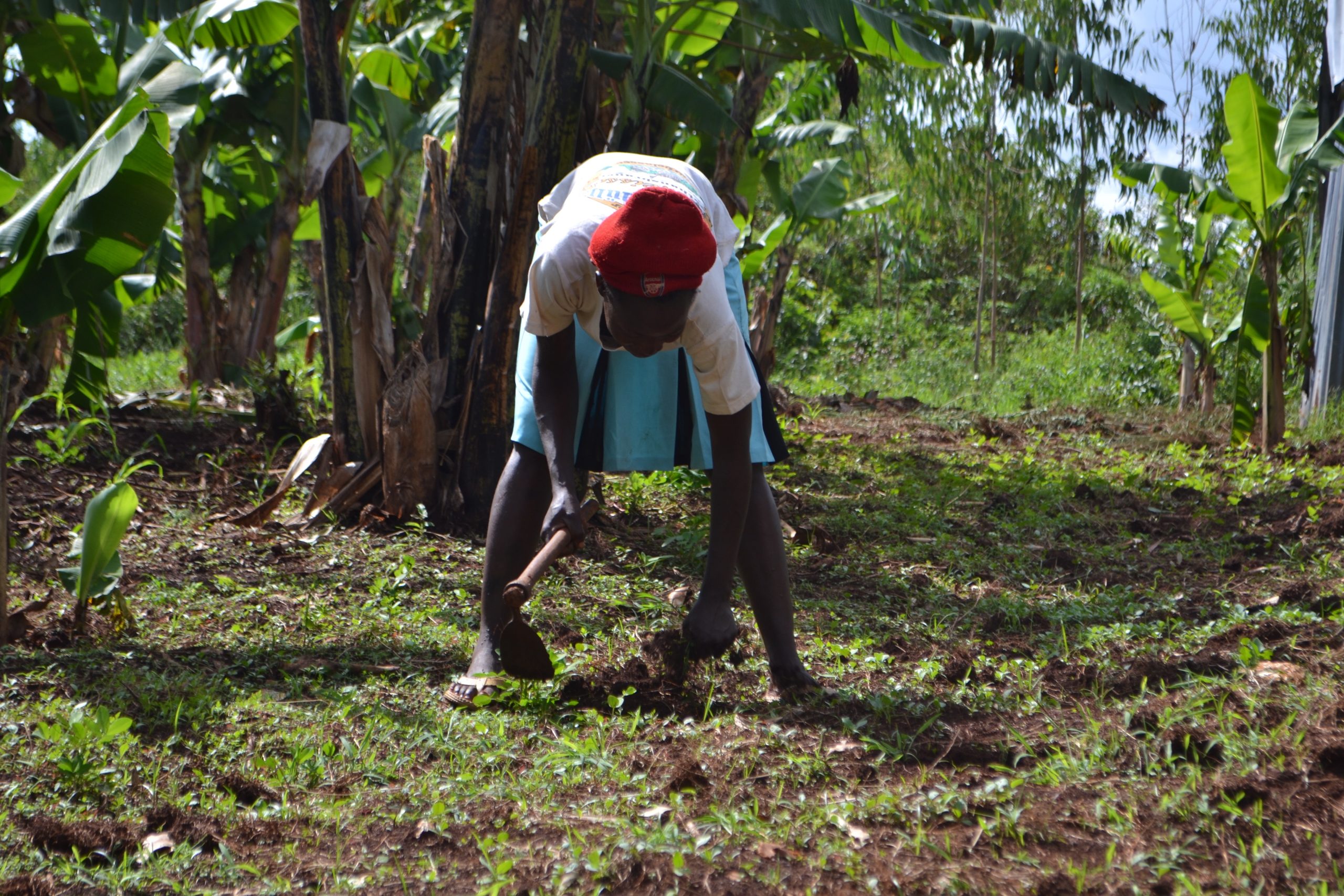
Why Local Solutions Matter: From Ndhiwa to the World.
Ndhiwa, where Twende Pamoja works with local communities, is a rural area already feeling the sharp edges of climate change. These conditions have led to food insecurity, land degradation and water shortages, placing a growing strain on household resilience, particularly for children, as malnutrition rises when families struggle to produce enough reliable food. Because most households in Ndhiwa depend on farming, climate change directly threatens both livelihoods and daily survival.
As Earth Day reminds us each year, protecting the environment is not an abstract goal, but a shared commitment, and one that connects global concern, to local, practical choices.
In places like Ndhiwa, Earth Day is a timely reminder to support community-led solutions that are already rebuilding resilience.
It is also an opportunity to recognise the steady work of local stewardship and how knowledge is shared across generations, helping sustain progress well beyond a single planting season.
Yet Ndhiwa’s experience is not unique. Across the Global South, small-scale farming communities are facing similar pressures. Climate change is no longer a distant risk but a lived reality, shaping what people can grow, eat and earn. From East Africa to South Asia, conventional farming systems, built around stable rainfall and single crops, are showing their limits.
Too often, climate solutions are designed far from the communities they affect. Large-scale interventions can overlook local knowledge and practical realities on the ground. In Ndhiwa, however, a different approach is taking root — community-led adaptation, shaped by local experience and livelihood needs, is proving to be a powerful pathway to climate resilience.

Team Kenya and Twende Pamoja support this approach by acting as facilitators rather than external problem-solvers. Their work focuses on agroecological practices — such as forest gardens, tree nurseries and regenerative farming — that restore degraded land while strengthening local livelihoods.
These initiatives are co-developed with communities, drawing on indigenous knowledge and local leadership. In doing so, they connect environmental restoration, food security and shared responsibility, framing climate resilience as a form of global citizenship grounded in local action.
Forest gardens are a central part of this model. They are farming systems designed to work like natural ecosystems, combining trees, shrubs, vegetables and ground crops in the same space.

Unlike monoculture farming, forest gardens rely on diversity rather than a single crop, making farms more resilient to climate shocks. Different plants support one another, soils stay covered, and nutrients are recycled naturally.
For farming households in Ndhiwa, forest gardens are adapted to local conditions rather than imposed as a fixed design. Farmers choose the species and layouts that suit their land and needs, allowing the approach to spread organically from one household to another. As soils recover, water is retained and biodiversity returns, forest gardens act as natural infrastructure, restoring land while helping communities adapt to a changing climate.
Together, these systems show how locally led, agroecological solutions can respond to global climate challenges in ways that are practical and inclusive.
From Climate Risk to Economic Stability
For families in Ndhiwa, climate resilience is closely tied to everyday well-being. Forest gardens strengthen this by improving food security, stabilising income, and supporting long-term resilience — turning ecological restoration into a practical foundation for more secure lives.
By integrating a wide variety of crops, forest gardens provide more consistent, year-round nutrition. Households become less dependent on a single harvest cycle, which helps reduce periods of hunger during dry spells or after crop failure. A more diverse diet also supports better health outcomes, especially for children who are often most affected by seasonal food shortages.
These systems also open pathways for more stable and diversified incomes. Surplus produce can be sold within local markets, while links to tree nurseries and small-scale value addition, such as processed goods, can provide additional earning opportunities where conditions allow. This combination reduces dependence on a single crop or income source.
Most importantly, ecological and crop diversity strengthens resilience. When climate shocks occur, households with forest gardens are less likely to face complete loss. Instead, they can rely on multiple crops and outputs, which helps absorb disruptions and speeds up recovery.
In this way, forest gardens operate as practical livelihood systems rather than purely environmental interventions — supporting both land restoration and the economic stability of farming households.

Forest Gardens as a Global Citizenship Solution
The forest gardens emerging in Ndhiwa reflect global citizenship in practice. They are locally driven, shaped by community priorities and knowledge systems, while also delivering environmental restoration through healthier soils and revived ecosystems, and supporting social outcomes by improving food access and household livelihoods.
These locally rooted approaches connect directly to wider global challenges. They promote more sustainable patterns of production and consumption, highlight the unequal impacts of climate change, and reinforce the idea of shared responsibility for environmental stewardship.
Ndhiwa demonstrates that communities most affected by climate change are not only responding to it, but also actively shaping solutions. Knowledge flows in both directions — Ndhiwa is not merely adopting external ideas but generating practical lessons that have relevance beyond the local context. Community-led agroecology offers insights that can inform climate and development strategies.
Local Action, Global Impact
Forest gardens in Ndhiwa illustrate how climate adaptation, food security, and livelihood resilience can be addressed together through locally led action. While modest in scale, these initiatives contribute to broader global goals by demonstrating the effectiveness of solutions grounded in local realities.
Forest gardens in Ndhiwa show that climate resilience is not only a technical challenge, but also a social and ethical one. When communities are trusted to lead, drawing on their own knowledge, land, and priorities, solutions become more than effective — they become fair, resilient, and lasting.
Forest gardens remind us that meaningful global progress begins by recognising local communities not as recipients of change, but as leaders of it.